Cemetery of the sexes, Lunden
HISTOUR point L2 | Impressive monument to Dithmarschen's past
The family cemetery in Lunden stands as an impressive monument to Dithmarschen’s past. Here, the deceased members of wealthy and influential families and clans residing in the Lunden parish were laid to rest.
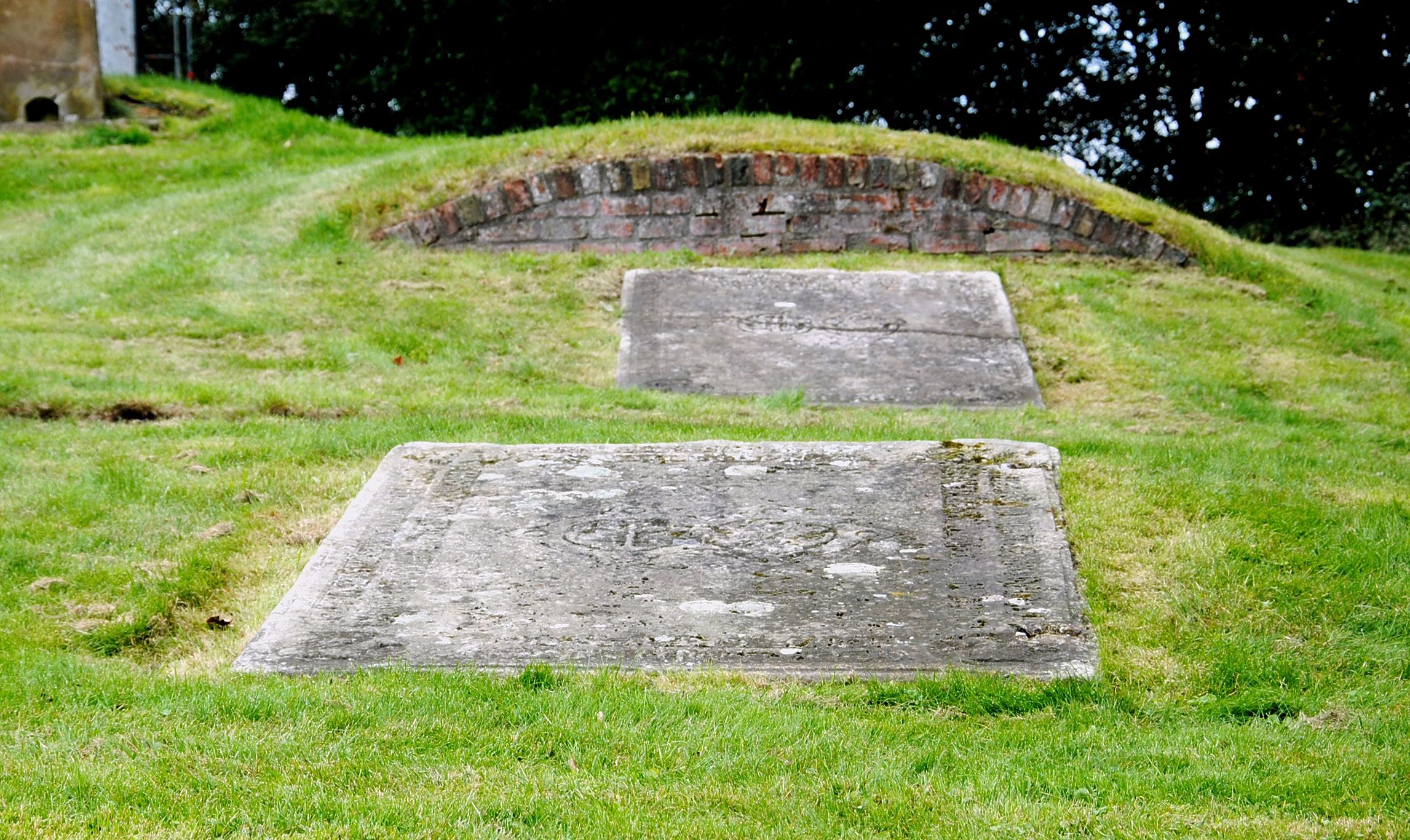
The deceased found their final resting place either directly in the ground or in one of the burial vaults, most of which are oriented from west to east. Of the 19 burial vaults listed in the burial register established in 1823, 13 have survived. In the crypts, the coffins were placed either on parallel rows of bricks or on iron racks. The barrel-vaulted crypts were built of brick and typically feature two ventilation shafts. The tomb slabs and stelae weigh up to two metric tons and are primarily made of Weser sandstone.
The stones and cellars belonged to the respective house or estate and were inherited or sold along with it; this is documented by occasionally added later dates and differing family names on the tombstones.
Many stones follow the same design: The four corner symbols—man, lion, bull, and eagle—represent the four Evangelists: Matthew, Mark, Luke, and John. In the center stands an angel holding the male coat of arms in his left hand and the female coat of arms in his right.
Of particular significance are the expiatory stone—relocated here—for Peter Swyn , the regent of Dithmarschen who was murdered in 1537, and his adjacent gravestone, as well as the stones of the Nanne family.
The family cemetery was reserved for the wealthy upper class; the vast majority of the population was buried, without names or traces, in the southeastern part of the cemetery—on the so-called “Armen- oder Glockenberg”—until well into the 19th century.
The Dithmarschen clans likely emerged in the Middle Ages in connection with the first diking of the marshes. They remained significant, cooperatively organized associations until the first half of the 16th century. Their names are still reflected today in place names in the Marsch region (e.g., Wennemannswisch). The clans performed various functions for their members: legal protection (assistance with oaths = Nemede), support in disputes and feuds (including blood feuds), fire insurance, social assistance in cases of poverty, and shared responsibility for dike maintenance.